

Understanding Inclusivity
To better understand inclusivity, we turned to the expertise of Tina Halal, an inclusive education specialist and higher education teacher from Miriam College. She explained strategies for being inclusive and the different alternatives facilitators can use to accommodate the varying needs of their learners.
Recommending Inclusive Alternatives
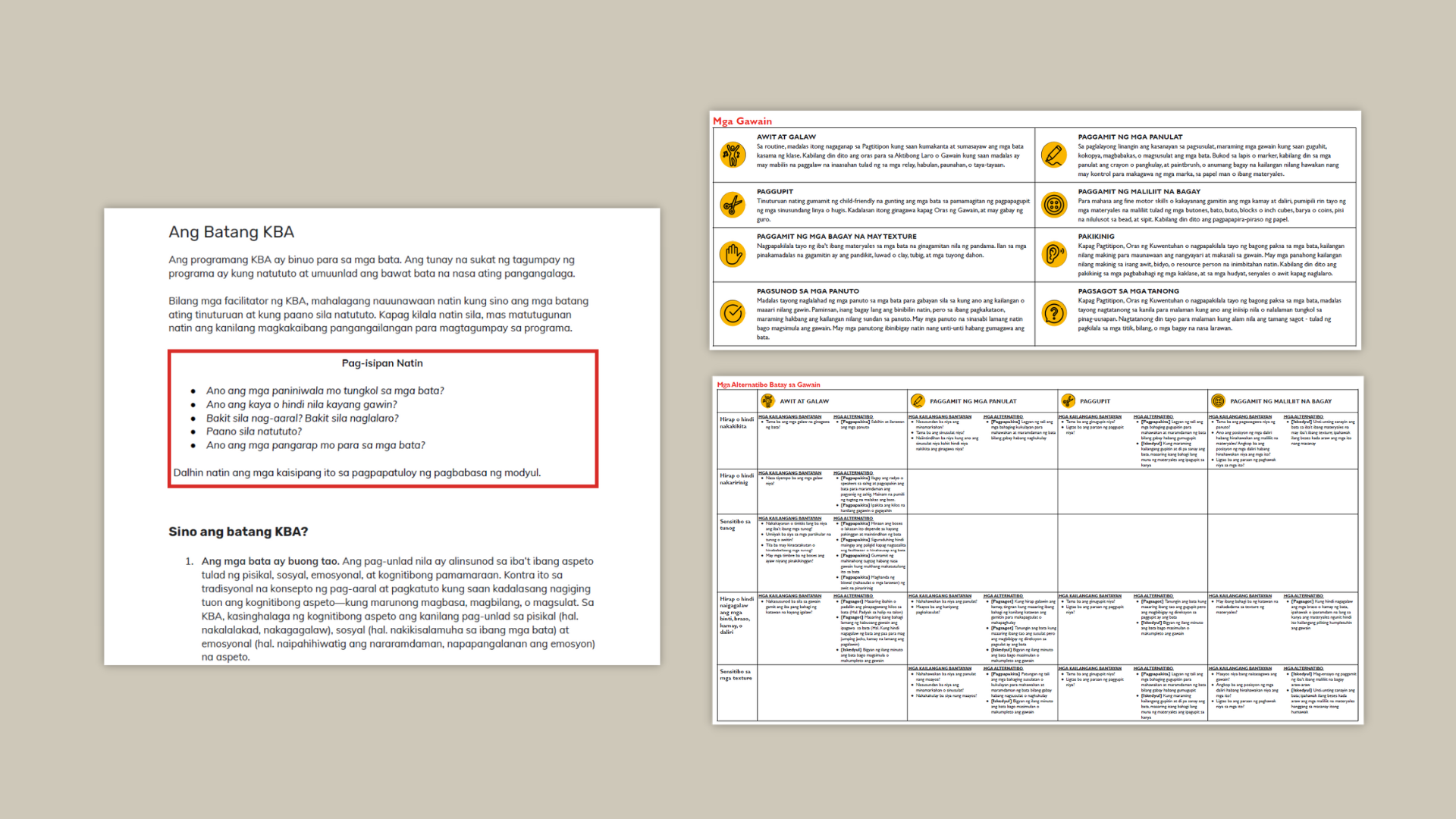
The initial plan was to produce activity-specific guides providing options and alternatives to each and every activity in the modules. We soon realized that a more strategic approach would be to categorize the module activities into activity types (writing, cutting, listening, moving, responding, etc.), and provide general alternatives for each type of activity based on the child’s behaviors or disabilities (having difficulty seeing, hearing, speaking, moving, etc.). For example, we recommended that as an alternative to giving verbal instructions to children who exhibit difficulty in hearing, the instructions can be made visual through words, illustrations, or body movements instead. The end product is an ‘Alternatives Cheat Sheet’ that the facilitators can easily refer to when they review the modules and prepare for their sessions.
Adding More Layers
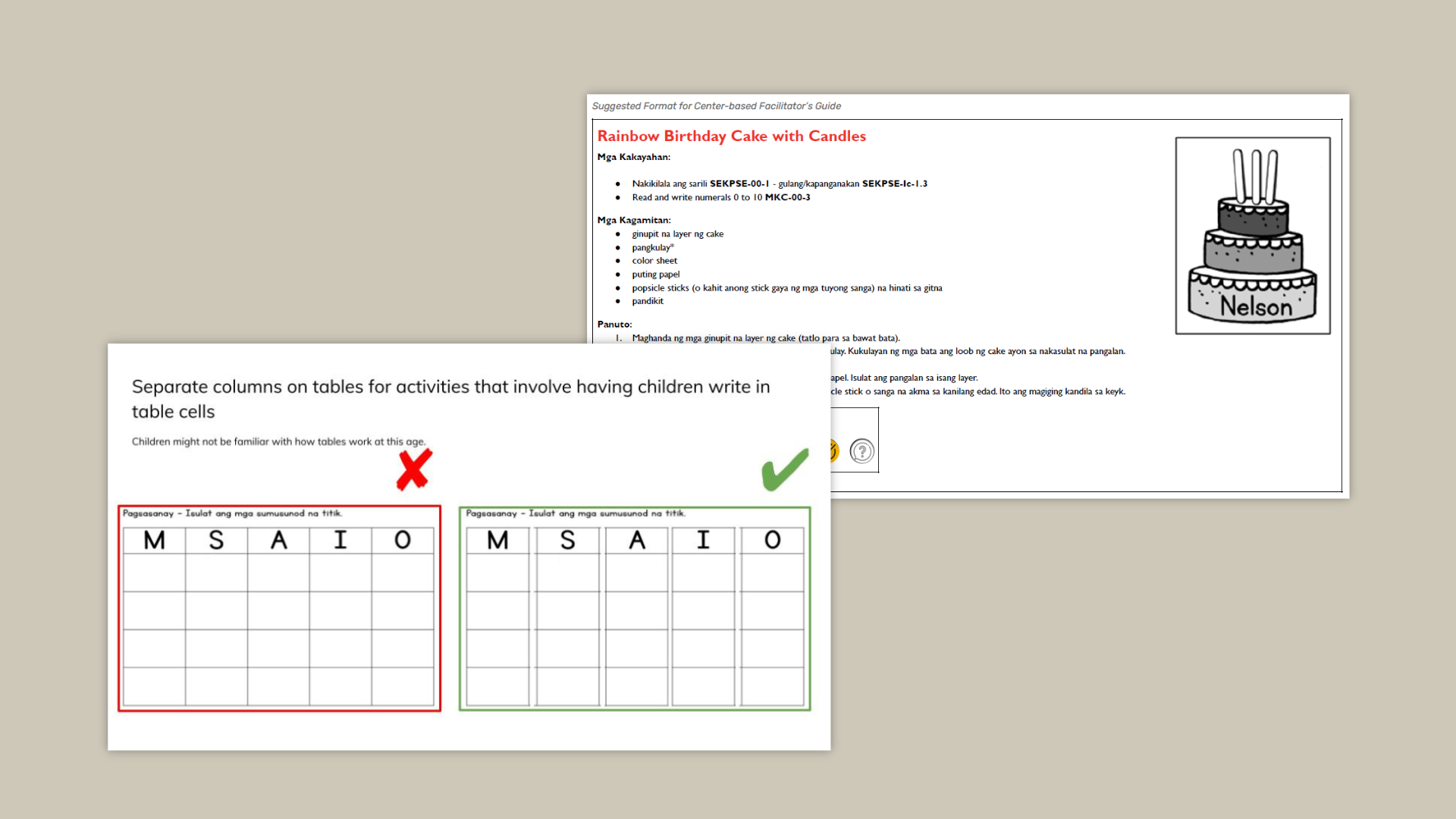
To supplement the cheat sheet, we produced write-ups about the KBA children (who they are, how they learn, and their varying needs and contexts), the roles of facilitators, caregivers, and parents in the program, and the importance of being inclusive and providing accommodations and alternatives. With the addition of these, the modules will not only instruct the facilitators on what to do, but will also provide them with the fundamental knowledge, guiding principles, mindsets, and beliefs behind inclusive teaching and learning. The write-ups for the center-based modules that are being used by trained facilitators were written slightly differently from the write-ups for the home-based modules which are used by parents and caregivers. This is to make the content of the center-based modules more relatable and more nuanced for its intended audience. Together, the ready-to-insert write-ups and cheat sheet provided the facilitators with a comprehensive perspective on inclusion and how it can be applied in the program. We also gave inclusive recommendations on the visual elements, design, and layout of the handouts and worksheets.