

Aligning on a Community’s Shared Purpose and Identity
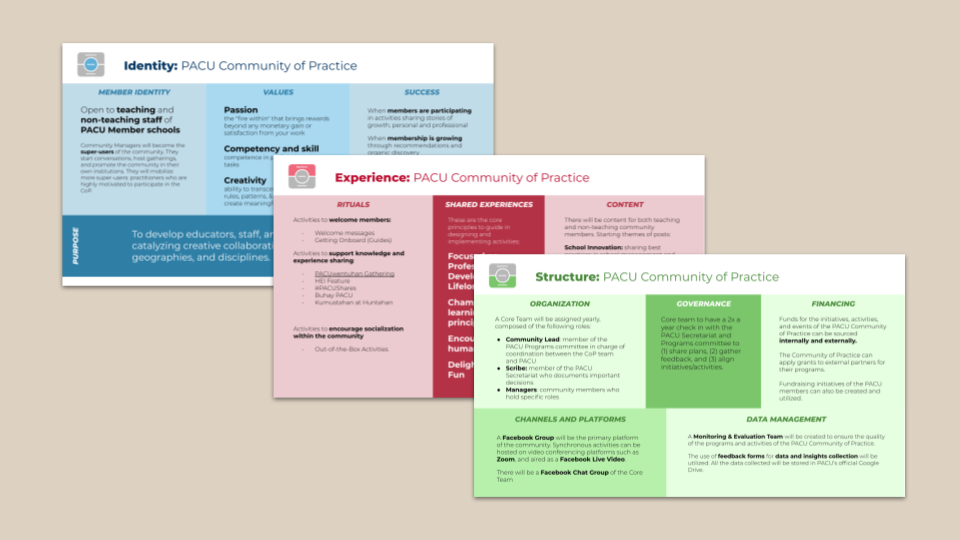
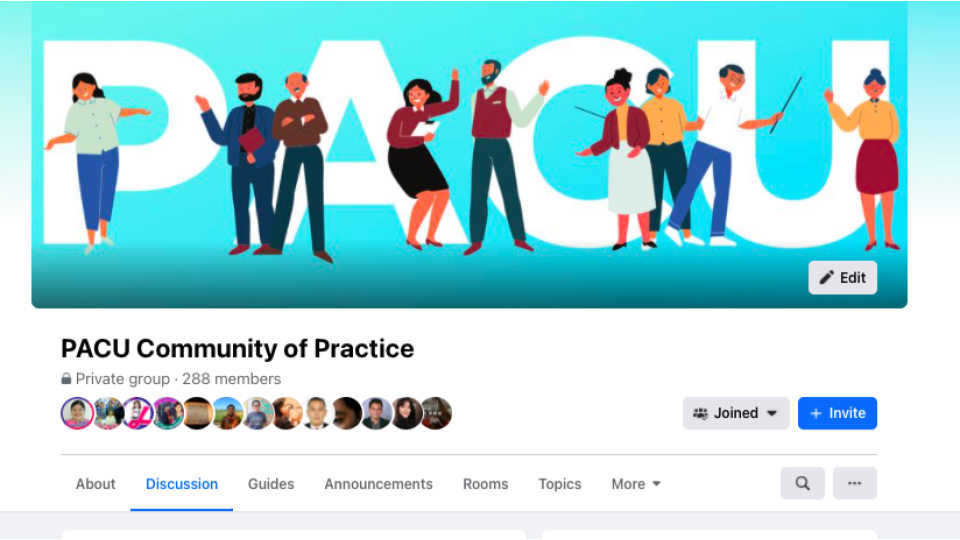
For the first phase of the project, we used the Community Canvas exercise with higher education practitioners from PACU’s member institutions. Through these co-design sessions, we were able to come up with the community’s purpose, identity, shared values, as well as the success indicators. At the end of this phase we were able to launch the online PACU Community of Practice through an exclusive Facebook Group.
Offering Shared Experiences and Rituals for the Community
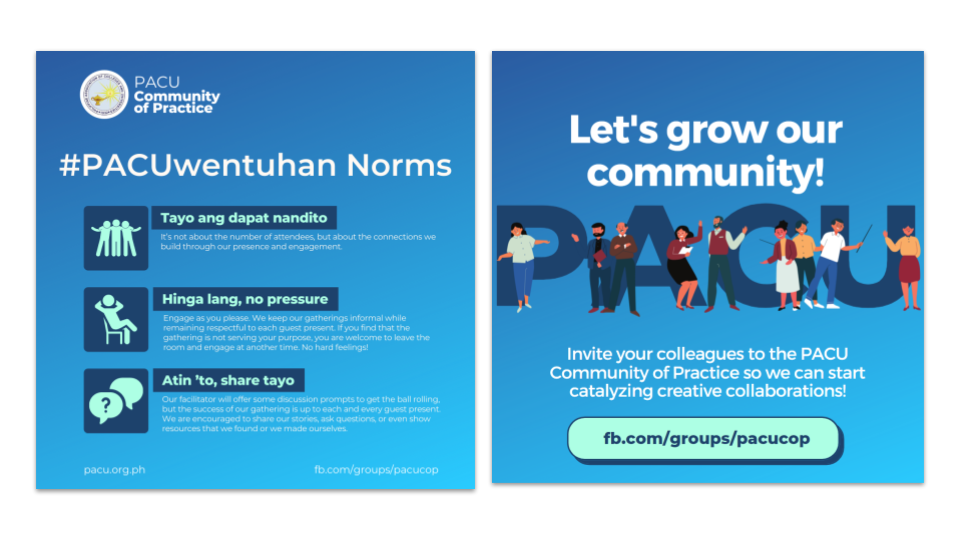
We learned from successful learning communities that it is important to have regular activities as well as multiple options for engagement for the members. After setting up the online Facebook community, we designed experiences and rituals that would keep the community members informed, engaged, and connected. These include weekly asynchronous check-ins, resource-sharing, online discussion threads, a weekly new member welcome post, and a synchronous gathering fondly called PACUwentuhan Community Gatherings. The PACUwentuhan Community Gatherings are 30-minute to 1-hour peer-led conversations held in FB’s Room function, or over Zoom. Topics are gathered from the members beforehand either by looking through past threads or by polling options in the group. We learned that community members enjoy these gatherings for the safe space, the light yet collegial interactions, as well as the rich conversations around the chosen gathering topic - something webinars and formal training programs sometimes fail to offer its participants.
Creating Structure that Enables Members to bring the Community to Life.
With the continued growth and expansion of the PACU Community of Practice, the third phase of the project focused on equipping community members with the skills and creative confidence to take ownership over the community. We had a capacity building workshop for community managers designed to orient interested members with the foundations of the learning community (i.e. Community’s Identity, Norms, Experiences and Structure). With all the inputs, insights, and experiences throughout this project, we were able to create a Community Manager’s Playbook, a guide for members to ensure that the community is actively engaging in purposeful activities for collaboration in higher education.